Mulberry leaf and blood sugar: where it sits in Flat Belly Tonic

Updated August 2026 · reviewed by the Flat Belly Tonic Research Team. We are an independent information resource, not a medical provider, and this article is educational rather than medical advice.
Mulberry leaf is the leaf of the white mulberry tree (Morus alba), brewed as a tea for centuries across East Asia and studied today for how the body handles carbohydrate after a meal. It contains naturally occurring plant compounds — most notably 1-deoxynojirimycin (DNJ) and a family of antioxidant polyphenols — and it appears as one plant in the Flat Belly Tonic morning blend. It is a food-based botanical, not a medicine, and it does not treat, cure or prevent any condition.
Mulberry leaf, post-meal balance and where it sits in the tonic — in one place.
- What it is
- The dried leaf of Morus alba, the white mulberry tree — a traditional East Asian tea, distinct from the sweet mulberry fruit.
- Why blood sugar comes up
- The leaf contains DNJ and polyphenols that are studied for the rise in blood sugar after a carbohydrate meal.
- What the evidence says
- Small human trials are suggestive but short and mixed — it is an ingredient studied for post-meal balance, not a proven treatment.
- Where it fits
- One plant in the Flat Belly Tonic polyphenol blend, beside hibiscus, green tea and aronia berry — not a stand-alone blood-sugar product.
If you have ever felt the after-lunch slump that follows a big bowl of pasta, you have felt blood sugar in motion — the everyday backdrop to the mulberry leaf found in Flat Belly Tonic.
What is mulberry leaf, and how does it relate to blood sugar?
Mulberry leaf is the dried foliage of the white mulberry tree, brewed for centuries as a mild tea and, more recently, concentrated into extracts. It enters the blood-sugar conversation because of one compound, 1-deoxynojirimycin, studied for how carbohydrate is broken down after eating. It is a food, not a pharmaceutical, and the honest question is whether its compounds support post-meal balance, not whether they “treat” anything.
The most relevant human data on mulberry leaf are about a single meal, not about body weight. In a controlled study, mulberry leaf extract taken with 75 g of sucrose blunted the rise in blood glucose and raised breath hydrogen — a signature of sugar reaching the colon undigested (Mudra M. et al. “Influence of mulberry leaf extract on the blood glucose and breath hydrogen response to ingestion of 75 g sucrose by type 2 diabetic and control subjects.” Diabetes Care, 2007). That is a post-meal effect on carbohydrate handling, and it should not be read as a weight-loss claim (Pittler M.H. & Ernst E. “Dietary supplements for body-weight reduction: a systematic review.” American Journal of Clinical Nutrition, 2004).
What is Morus alba, and why has it been used for centuries?
Morus alba is the botanical name for the white mulberry, a hardy tree native to East Asia and famous first as the food of the silkworm. Long before anyone measured a polyphenol, its leaf was brewed as a caffeine-free tea in traditional East Asian herbal practice. That heritage is the honest headline: mulberry leaf earns its place through a long record of traditional use, and science is only now trying to understand what sits behind it.
How was mulberry leaf used in traditional East Asian practice?
In traditional Chinese, Japanese and Korean herbal traditions, mulberry leaf — known as sang ye in Chinese sources — was one of many plants used as a gentle daily infusion, a mild tea rather than a dramatic remedy. That fits how a food-based botanical belongs in a modern routine: a small, repeatable habit, not a rescue.
What plant compounds does mulberry leaf contain?
Mulberry leaf’s interest comes from a cluster of naturally occurring compounds. The table below summarises the best-known, with the general roles researchers discuss, in plain terms.
| Compound | Type | General role discussed in research |
|---|---|---|
| 1-Deoxynojirimycin (DNJ) | Iminosugar (sugar-mimic) | The signature mulberry compound; studied for how quickly carbohydrate is broken down and absorbed after a meal. |
| Chlorogenic acid | Polyphenol | A common antioxidant plant acid, also found in coffee, studied as part of a plant-rich diet. |
| Rutin & quercetin | Flavonoids | Antioxidant flavonoids widespread in fruits and vegetables and enjoyed as everyday dietary compounds. |
| Fibre & minerals | Whole-leaf nutrients | The leaf itself contributes fibre and trace minerals when consumed as a whole-plant tea or powder. |
Readers who want to go further will find aronia berry and its anthocyanins handled separately, including why the chokeberry is one of the most polyphenol-dense fruits ever measured.
How might mulberry leaf support post-meal balance?
The proposed mechanism behind mulberry leaf and blood sugar centres on digestion: mulberry’s DNJ is thought to slow one step of carbohydrate breakdown, so sugar arrives more gradually. That gentler arrival is what researchers mean by supporting “post-meal balance” — a mechanism, not a promise.
What is 1-deoxynojirimycin (DNJ)?
DNJ is a natural compound in mulberry leaf that resembles a sugar molecule, which is why it is called a sugar-mimic. Because it looks like sugar, it can occupy some of the same spots on the digestive enzymes that break starch down, so a portion of the carbohydrate is digested more slowly — softening the peak after a starchy meal. It is the single most-studied reason mulberry leaf is linked to blood sugar.

What does the research actually show?
The honest summary is that the evidence is promising but early. Several small, short human trials have found that a mulberry leaf extract taken before a carbohydrate load can blunt the after-meal rise in blood sugar versus a placebo. But these studies are small, brief and use standardised extracts, not casual cups of tea, and results differ between people. Mulberry leaf is best framed as a food-based ingredient studied for post-meal balance, and no more.

See the exact dose in Flat Belly Tonic
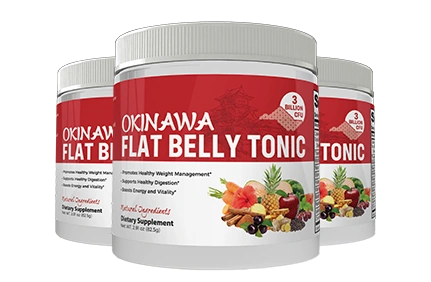
Mulberry sits inside the Flat Belly Tonic polyphenol blend, alongside hibiscus, green tea and aronia berry, as one part of a once-daily morning drink. The six-jar bundle is the best value at $49 per jar, with free U.S. shipping and a 90-day guarantee.
See the exact dose in Flat Belly Tonic — from $49/jarWhat are mulberry polyphenols, and why do they matter for metabolism?
Mulberry polyphenols are the antioxidant plant compounds in the leaf — chiefly flavonoids such as rutin and quercetin plus chlorogenic acid — the same family found in green tea, hibiscus and berries. They matter to the mulberry leaf metabolism conversation because diets rich in these compounds are consistently linked to general metabolic wellness, though that link reflects an overall dietary pattern, not proof any single polyphenol changes your metabolism alone. This is why mulberry rarely travels alone: formulas combine several polyphenol-rich plants so the antioxidant contribution stacks up, as our guide to hibiscus, green tea and probiotics for metabolism explains.
How does mulberry leaf fit into the Flat Belly Tonic blend?
In Flat Belly Tonic, mulberry is one plant in the polyphenol blend rather than a stand-alone blood-sugar product. The formula pairs that polyphenol blend of hibiscus, green tea, aronia and mulberry with a metabolic blend of cinnamon, ginger, turmeric and shilajit, and a digestive blend of prebiotic inulin and a probiotic culture. Mulberry adds its antioxidant polyphenols within a once-daily drink meant to support a balanced diet, not replace it.
| Flat Belly Tonic blend | Example plants | Everyday supporting role |
|---|---|---|
| Polyphenol blend | Hibiscus, green tea, aronia, mulberry | Antioxidant plant compounds as part of a plant-rich routine. |
| Metabolic blend | Cinnamon, ginger, turmeric, shilajit | Warming culinary botanicals rich in aromatic compounds. |
| Digestive blend | Prebiotic inulin, probiotic culture | Prebiotic fibre and live cultures to support everyday gut balance. |
The takeaway is proportion: mulberry leaf is a supporting player among several polyphenol plants, taken alongside food, movement and sleep. Our overview of how to support healthy weight management naturally puts the tonic in its place, the ingredients section lists every plant, and the homepage pricing shows the packages.

How should you use mulberry leaf sensibly?
Mulberry leaf is best treated like any food-based botanical: a small, consistent habit that complements a balanced diet, never a reason to eat more carbohydrate or skip medical care. Because its most-studied effect is on digestion, the sensible framing is “support around meals.”
Who should be cautious with mulberry leaf?
Anyone who manages blood sugar or takes medication should be especially careful, because a compound that influences carbohydrate absorption could, in theory, interact with treatment. Talk to your doctor before adding mulberry leaf if you are pregnant or nursing, under 18, take any medication (particularly for blood sugar), or have a diagnosed condition. Some people report mild digestive upset with concentrated extracts, which usually settles.
When will you notice anything?
Any effect on a single meal is tied to that meal, while the broader value of a polyphenol-rich routine builds over weeks. Mulberry leaf is not a switch you flip; it is one small, repeatable input among many, and results vary.
Check today’s Flat Belly Tonic pricing →
None of this sits in isolation. The companion article on cinnamon bark and everyday metabolism takes up what the mixed cinnamon trial literature actually shows in detail.
Frequently asked questions
What is mulberry leaf, and how does it relate to blood sugar?
Mulberry leaf is the leaf of the white mulberry tree (Morus alba), long brewed as a tea in East Asia. It contains plant compounds — notably 1-deoxynojirimycin (DNJ) and polyphenols — that are studied for how the body handles carbohydrate after a meal. It is a food-based botanical, not a medicine, and it does not treat or cure diabetes or any condition.
What is Morus alba, and is it the same as the mulberry you eat?
Morus alba is the botanical name for the white mulberry tree. The berries are the sweet fruit some people eat, while mulberry leaf refers specifically to the tree’s leaves, which have their own traditional tea use and a different plant-compound profile from the fruit.
Does mulberry leaf actually lower blood sugar?
Some small human studies suggest mulberry leaf extract may blunt the rise in blood sugar after a carbohydrate meal, but the trials are small and short and results vary. It is best described as a food-based ingredient studied for post-meal balance, not a proven treatment. Anyone managing blood sugar or taking medication should speak with a doctor first.
What are mulberry polyphenols?
Mulberry polyphenols are the antioxidant plant compounds in the leaf, including flavonoids such as rutin and quercetin and chlorogenic acid. Polyphenols are the same broad family found in green tea, hibiscus and berries, and they are valued as part of a plant-rich diet rather than as a cure for anything.
How does mulberry leaf fit into Flat Belly Tonic?
Mulberry is one plant in the Flat Belly Tonic polyphenol blend, sitting alongside hibiscus, green tea and aronia berry. It is included for its antioxidant polyphenols as part of a once-daily morning drink, not as a stand-alone blood-sugar product, and the tonic supports a balanced diet rather than replacing it.
Is mulberry leaf safe to take every day?
Mulberry leaf has a long history of use as a tea and is generally well tolerated at food-level amounts, though some people report mild digestive upset. If you are pregnant or nursing, take diabetes or other medication, or have a medical condition, ask a qualified healthcare professional before adding it, because it may affect how your body handles carbohydrate.
Try Flat Belly Tonic risk-free for 90 days →
Flat Belly Tonic is a dietary supplement, not a treatment for any medical condition. These statements have not been evaluated by the Food and Drug Administration. This product is not intended to diagnose, treat, cure or prevent any disease. Always consult a qualified healthcare professional about your individual needs.
References & further reading
- National Center for Complementary and Integrative Health (NCCIH). Diabetes and Dietary Supplements. nccih.nih.gov/health/diabetes-and-dietary-supplements
- Mudra M. et al. “Influence of mulberry leaf extract on the blood glucose and breath hydrogen response to ingestion of 75 g sucrose by type 2 diabetic and control subjects.” Diabetes Care, 2007. pubmed.ncbi.nlm.nih.gov/17303787
- National Center for Biotechnology Information (NCBI). 1-Deoxynojirimycin — compound overview. pubchem.ncbi.nlm.nih.gov/compound/1-Deoxynojirimycin
- Examine.com. Mulberry (Morus alba) — evidence-based summary. examine.com/supplements/morus-alba
- National Center for Complementary and Integrative Health (NCCIH). Antioxidants: In Depth. nccih.nih.gov/health/antioxidants-in-depth
These references describe the ingredients and compounds in general terms and do not constitute evidence that any product treats, cures or prevents any condition.
Keep reading: how hibiscus, green tea and probiotics work · supporting healthy weight management naturally · back to the Flat Belly Tonic blog · homepage.